wellness
Sukhumvit Markets Sell 5 Fermented Foods That Reshape Your Gut
From tangy som pak to probiotic-rich kefir, Sukhumvit's markets and health cafés are stocked with fermented foods that researchers say can reshape your gut microbiome.
How we reported this
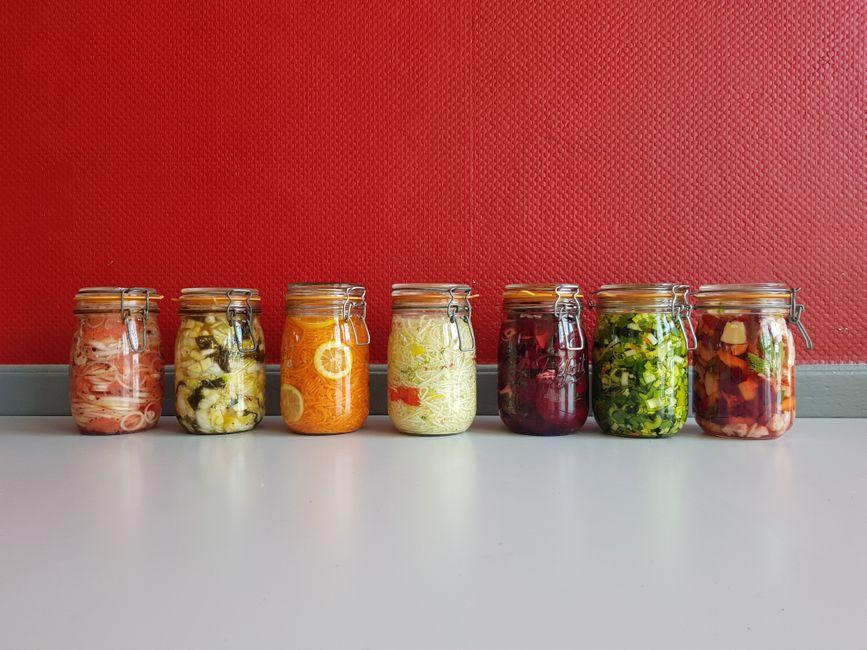
The fermented food aisle is having a moment in Bangkok. Walk through Ekkamai or down the sois branching off Sukhumvit Road between BTS On Nut and Phrom Phong, and you will find shelves and street carts offering everything from traditional Thai pickled vegetables to Korean kimchi, Japanese miso, and cold-pressed kombucha, all of it marketed, increasingly aggressively, around gut health. The science behind those claims is more solid than the marketing hype suggests.
Interest in the gut microbiome has accelerated sharply since a landmark 2021 Stanford University study published in Cell found that a 10-week high-fermented-food diet increased microbiome diversity and reduced 19 inflammatory proteins. That research gave commercial momentum to a trend already simmering in urban Southeast Asia, where traditional fermented staples were never really off the table, they just got rebranded. In Bangkok, the annual wellness economy is now estimated at over 200 billion baht, with functional foods among its fastest-growing segments, according to the Thai Wellness Industry Association's 2025 market brief.
What to Look For, and Where to Find It
Start close to home. Talad Plu-style vendors who set up along the footpaths near Sukhumvit Soi 38 sell som pak, lacto-fermented mustard greens, for as little as 20 baht a bag. The process is identical to sauerkraut fermentation: salt, pressure, time, lactic acid bacteria. The end result delivers Lactobacillus strains your gut recognises. It is unglamorous and extremely effective.
Further up the strip, Tops Market on Sukhumvit Soi 63 (Ekkamai) stocks a rotating selection of imported and locally produced fermented products. Coconut-milk kefir from a Chiang Mai producer runs about 95 baht for 330ml. A 500g tub of locally made white miso paste sits around 180 baht. Kimchi sourced from the Korean-owned producers supplying much of Bangkok's restaurant district is usually priced between 120 and 160 baht for 300g. These are live-culture products, check the label for phrases like ไม่ผ่านการพาสเจอไรซ์ (unpasteurised) or simply look for products that require refrigeration and have visible sediment or active bubbles.
Villa Market's branch at Sukhumvit Soi 33 carries a wider premium range, including Jun kombucha brewed in Bangkok's Lat Phrao district and sold at 135 baht per 330ml bottle. The store also keeps a reliable supply of Greek-style yoghurt from local producer Yili, which underwent fermentation using Lactobacillus bulgaricus and Streptococcus thermophilus, two of the most studied probiotic strains in clinical literature.
Beyond the Label: What the Evidence Actually Says
Probiotic products are not medication. The World Health Organisation defines probiotics as live microorganisms that, when administered in adequate amounts, confer a health benefit on the host. That qualifying phrase, adequate amounts, matters enormously. Most commercial products have not been tested in randomised controlled trials at the doses sold. What researchers do agree on is that dietary diversity in fermented foods, rather than any single product, correlates most consistently with improved microbiome markers.
A 2024 review in Nature Microbiology examined diets across 14 countries and found that populations eating three or more distinct fermented food sources daily showed significantly higher gut microbial richness than those relying on supplementation alone. Traditional Thai cuisine, which frequently includes nam prik pla ra (fermented fish sauce paste), pickled garlic, and sour curry bases built on tamarind fermentation, scores well by this measure, if people are eating it in its traditional form rather than the sugar-adjusted restaurant versions.
The practical upshot for anyone eating their way through Sukhumvit: variety beats volume. A small serving of som pak from the Soi 38 vendors, a spoonful of miso stirred into broth at lunch, and a glass of kefir in the evening delivers more microbial diversity than a double dose of a single branded probiotic drink. The neighbourhood makes this achievable without a significant budget, and without flying to Seoul or Tokyo to find it. Consult a Bangkok-based registered dietitian or gastroenterologist before making significant dietary changes, particularly if you have existing digestive conditions.