community
Discover Bangkok's Best Thai-Chinese Food in Yaowarat
From neon-lit street stalls to Michelin-recognized eateries, Yaowarat Road remains the essential destination for those seeking the city's best Thai-Chinese flavours.
How we reported this
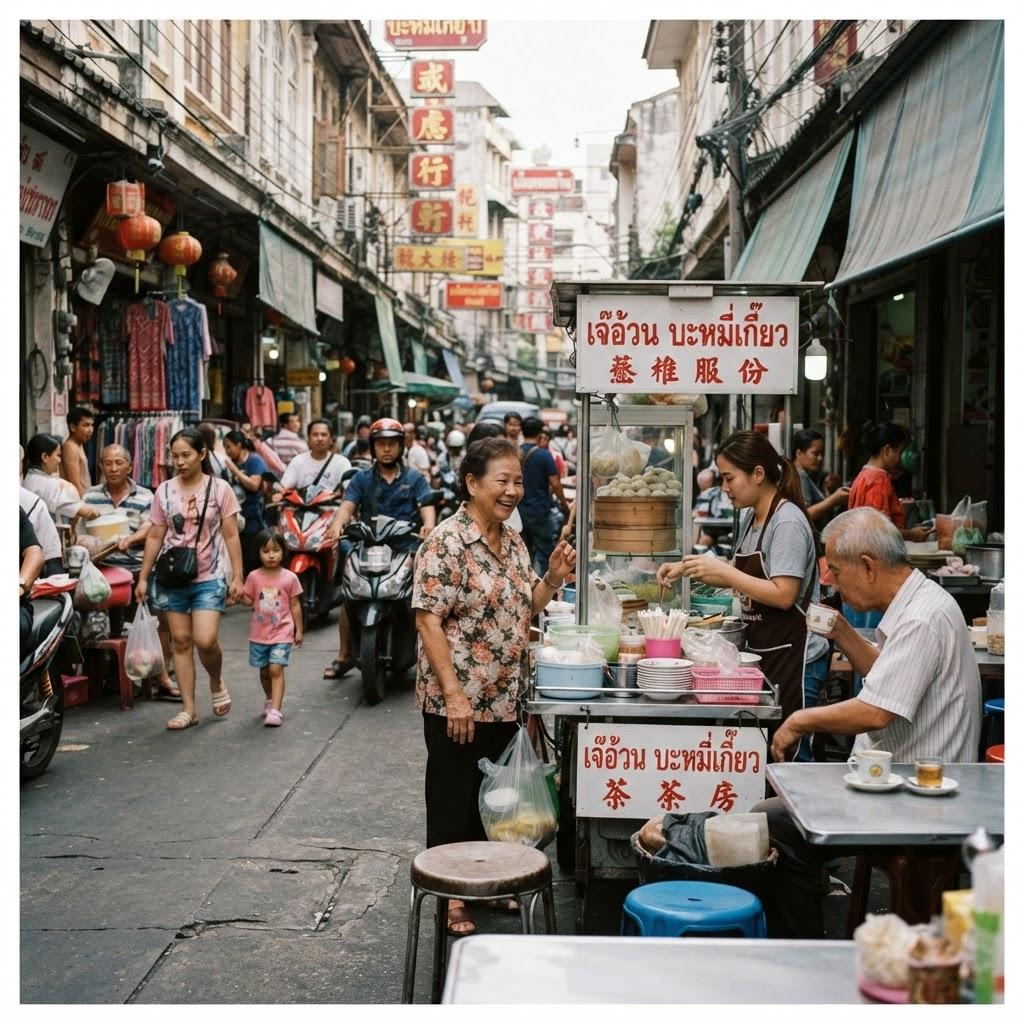
When the sun sets over Samphanthawong, the atmosphere on Yaowarat Road shifts into high gear. As the city’s primary food lover’s paradise, this 1-1.5 km district serves as the central hub for the capital's street food culture, blending Cantonese, Teochew, and Hainanese culinary traditions with local Thai ingredients [1, 2, 3]. While the area is home to residential communities that have maintained these customs for over 200 years, visitors now flock here nightly to experience a concentration of flavours that defines the district's global reputation [3, 4].
Navigating the Night Market
For the uninitiated, the best time to experience this scene is after 5 p.m., when mobile cooking carts and hawker stalls begin to populate the sidewalks [1, 2, 3]. The energy hits its peak on weekends, particularly between 6 p.m. and midnight, when the road transforms into a neon-lit destination for everything from fish maw soup to kway chap [1, 4]. If you are planning a visit, avoid Mondays; most vendors remain closed on the first day of the week, pausing the usual bustle [1, 2, 3].
Dining options here range from the highly accessible to the refined. For a definitive street food experience, Nai Pon Kao Seer Po is widely recommended for its crispy pork and duck, while Lim Lao Ngow Fishball Noodle offers a Michelin-listed bowl for those seeking a recognized classic [1, 3]. Those searching for unique local desserts often head to Ba Hao Tian Mi, Yaowarat [1, 3]. For a more structured meal, the area balances its hawker-style offerings with upscale options like Supanniga Eating Room (Tha Tien) and NAAM 1608, both of which serve elevated versions of traditional dishes [3, 5].
Practical Tips for Your Visit
Beyond the food, the district rewards those who wander into the backstreets, where hidden gems sit alongside historic shophouses decorated with 2016 Bukruk festival street art [2, 4]. Daytime visitors can explore the wholesale goods at Sampeng Lane or visit the city’s oldest Chinese-Buddhist temple, Wat Mangkon Kamalawat, founded in 1872 [2, 4]. Access is straightforward via the Wat Mangkon station on the MRT Blue Line [4]. Whether you are grabbing a quick bite or sitting down for a full service, remember that the best experience is found by balancing the high-end Michelin restaurants with the quintessential, often affordable, street-side stalls that remain the lifeblood of Yaowarat [3, 4].